ResumifyAI
A resume reviewer. Drop in a PDF and get a score, charts that show where it's weak, and concrete fixes.
- For
- Job seekers. A personal product, built end to end.
- My role
- Sole designer and developer.
- When
- Nov 2024
- Built with
- Next.js, TypeScript, OpenAI API, Tailwind CSS, HTML Canvas
The brief
Most resume feedback is either a generic checklist or a long paragraph from a chatbot. I wanted a review you can scan in ten seconds, with numbers you can act on.
Upload, read, score
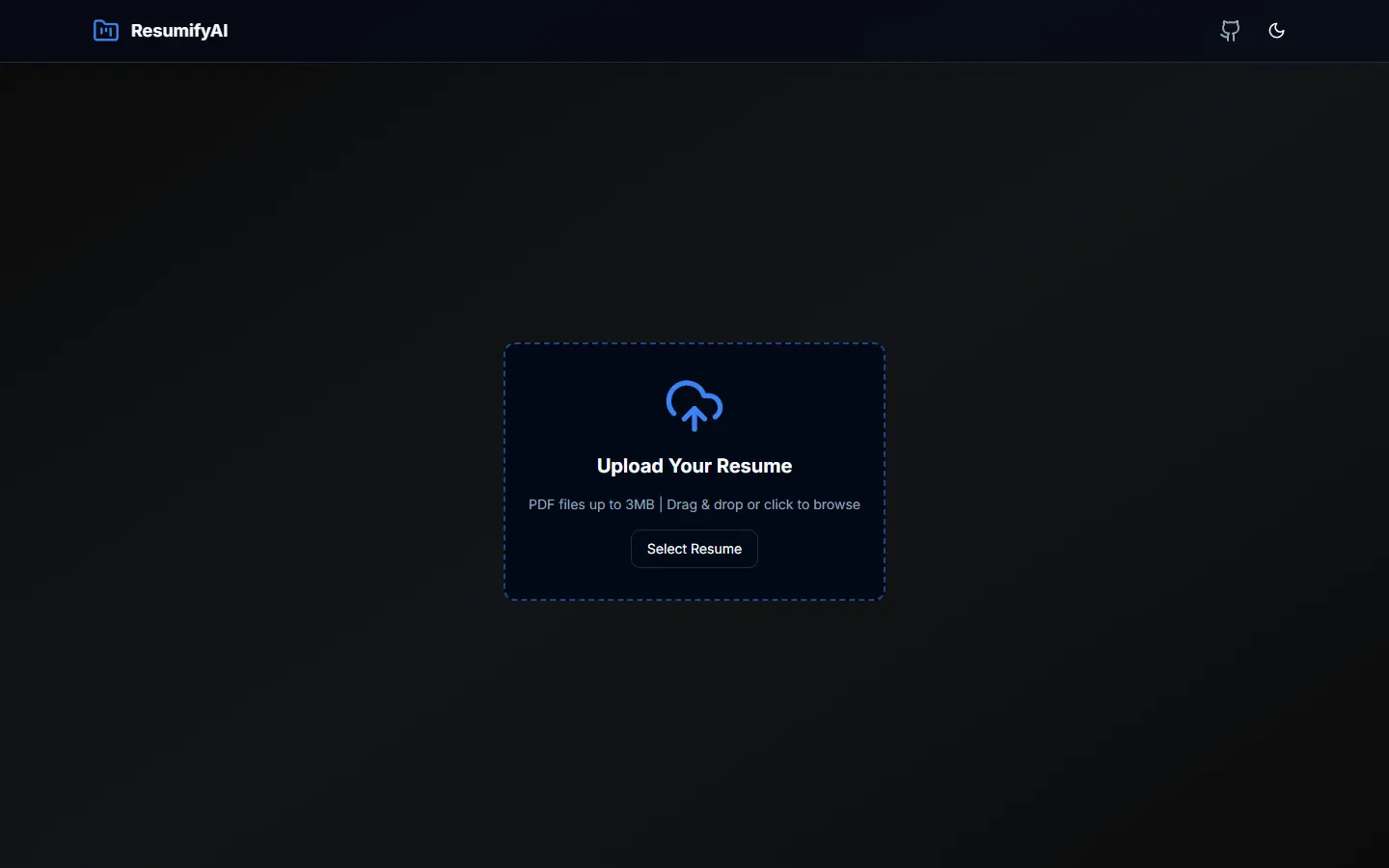
The whole product is one flow. You upload a PDF of up to 3 MB, the app extracts the text, sends it to the OpenAI API with a fixed review brief and renders the answer as a scored report.
Limits are checked in the browser before anything is sent, so a wrong file type or an oversized PDF gets a clear message instead of a failed request.
A report you can scan
The review comes back as structured data, not prose. Each section of the resume gets a score, and the scores are drawn as charts on an HTML canvas, so the weak spots show before you read a word.
Under the charts, each fix is one line tied to one section of the resume.
- Next.js and TypeScript for the app and its API route
- OpenAI API for the review, asked for a fixed structure
- HTML Canvas charts, drawn without a chart library
- Dark and light themes that follow the system setting
What I'd keep
Treat the model's answer as untrusted input. Asking for a fixed structure and checking it before rendering is what made the charts reliable.